





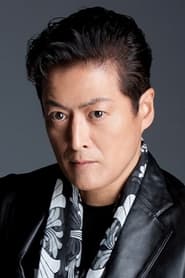
 Takanori Jinnai
Command Sasaki
Takanori Jinnai
Command Sasaki
Soundtrack
Burst City
Director
Writers
Genres
Overview
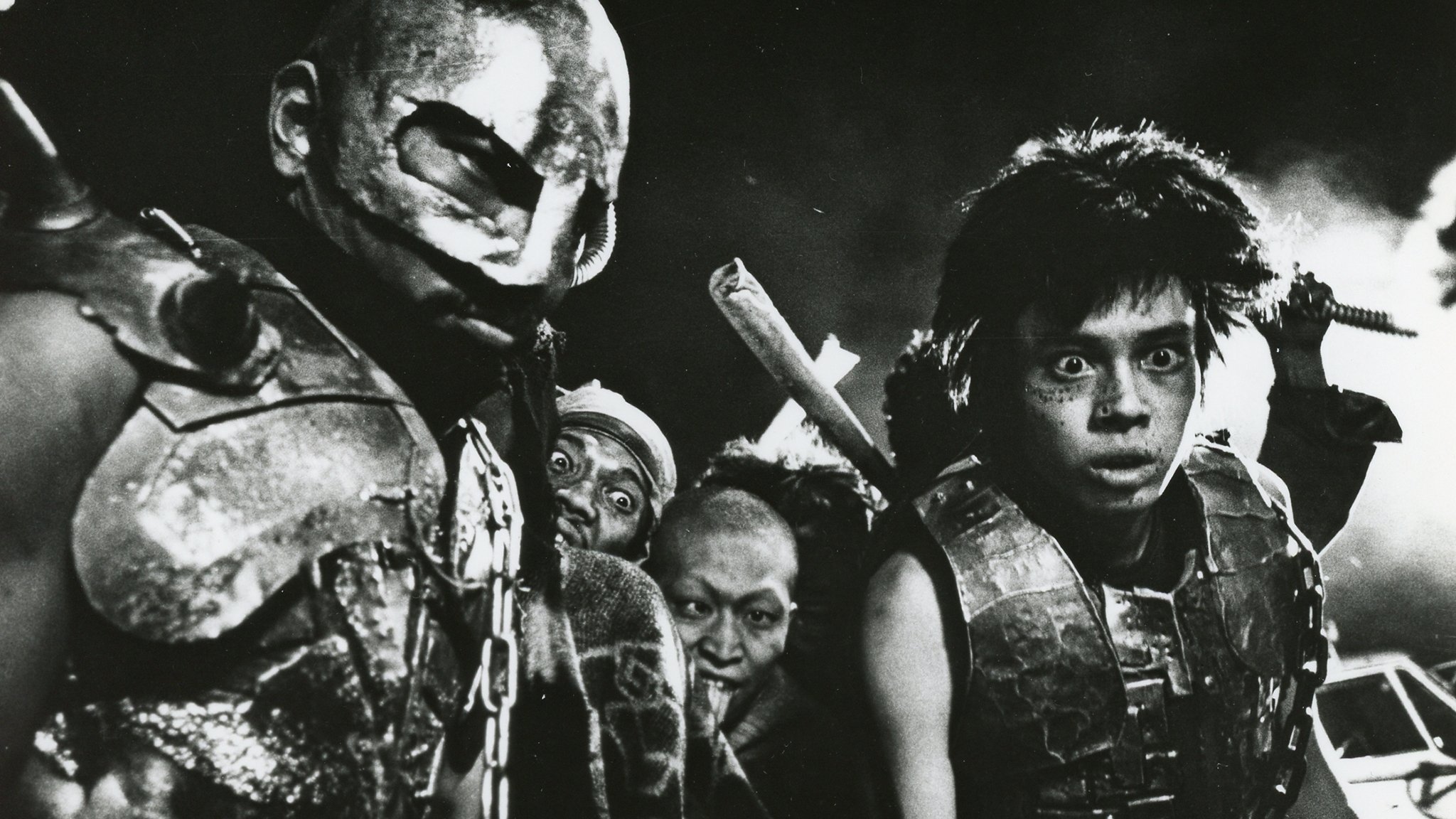
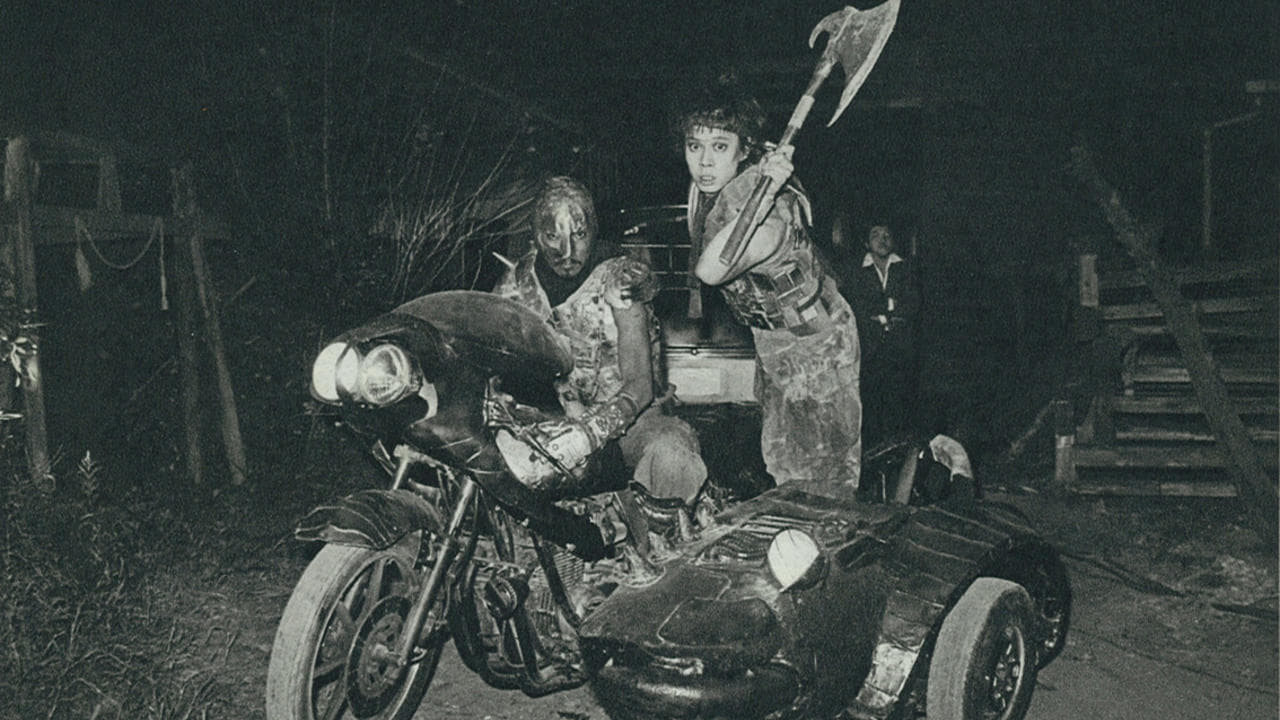
Sogo Ishii’s Burst City is an essential milestone that essentially birthed the aesthetic of the Japanese cyberpunk movement, heavily influencing future directors like Shinya Tsukamoto (Tetsuo: The Iron Man). Set in a dystopian, post-industrial wasteland version of Tokyo, the plot revolves around a group of rebellious punk bands, bikers, and outcasts protesting the construction of a nuclear power plant. Sonically, the film does not just feature a soundtrack—the music is weaponized as a literal tool of political and social revolt. Ishii edits the film to match the frantic, jagged bpm of the musical tracks, utilizing rapid-fire cuts, hyper-kinetic camera work, and distorted field recordings to create a dizzying, sensory-overload audio experience.
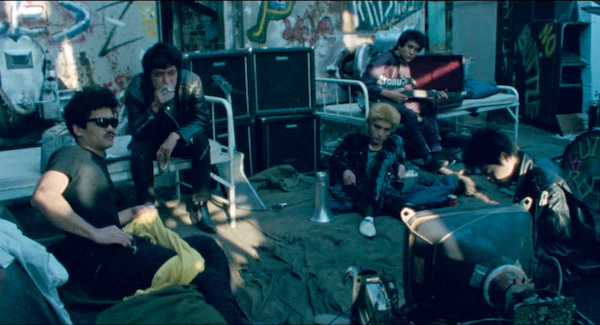
What gives Burst City legendary status among record collectors and punk historians is its cast. Instead of hiring traditional actors, Ishii cast the actual pioneers of the foundational 1980s Japanese punk subculture, letting them form fictionalized supergroups on screen. The main band in the film, The Battle Rockers, is a jaw-dropping assembly of real talent. It features Takanori Jinnai (frontman of the influential garage-punk band The Rockers) on vocals, alongside Shigeru Izumiya, and the rhythm section from The Roosters (bassist Hiroyuki Hanada and drummer Junji Ikehata). Their rivals in the film, the villainous, mute, cybernetic Mad Stalin band, are fronted by Michiro Endo, the legendary, chaotic vocalist of the seminal Japanese hardcore punk band The Stalin.
The sound design of Burst City is a chaotic masterclass in DIY filmmaking. Sogo Ishii and his audio team mixed the concert footage incredibly loud and over-driven, intentionally clipping the master tracks to mirror the sweat, violence, and dangerous feedback of an actual underground club gig. During the legendary climactic riot scenes, the production mixed the real, ambient mechanical sounds of revving motorcycle engines, clanging metal bars, and screaming rioters directly into the rhythm tracks of the music. This sonic layering blur the lines between the movie's soundtrack and its physical violence, creating a unified wall of industrial noise.
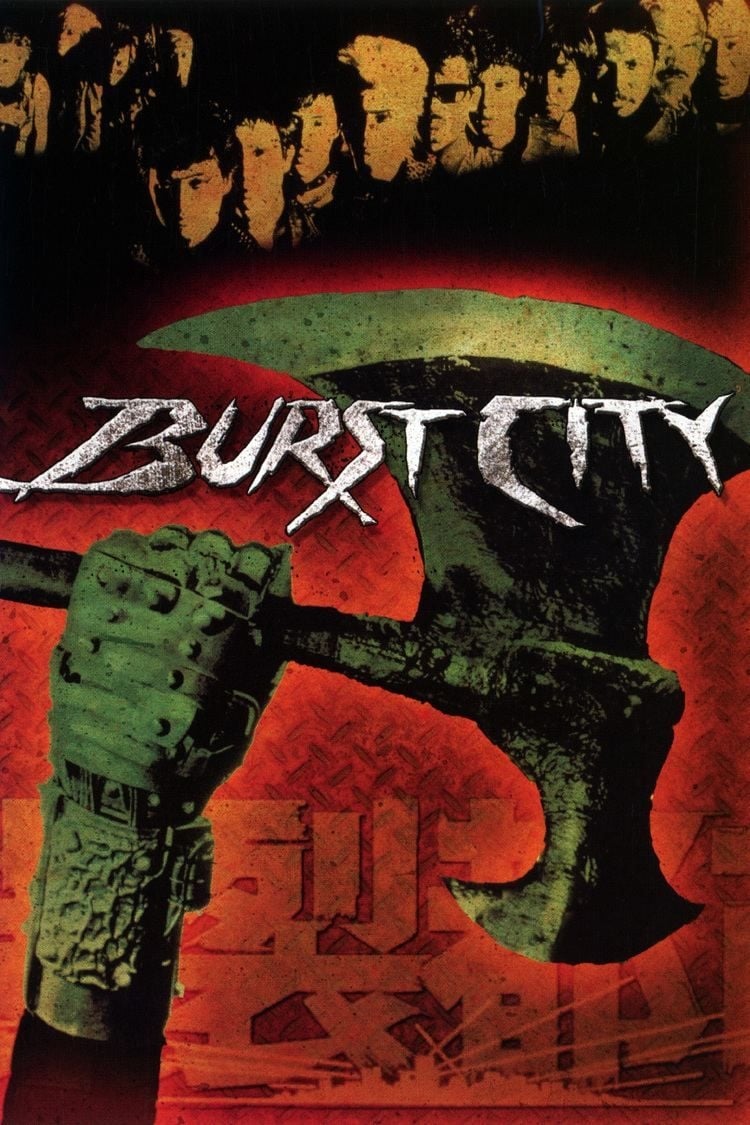
The official soundtrack for the film was released in Japan by Canyon Records in 1982. It remains a highly coveted, holy-grail vinyl release for international record collectors due to the exclusive studio tracks recorded by The Battle Rockers and The Stalin specifically for the film, including anthems like "Cell Number 8." The sonic tags that best define the movie are Japanese Hardcore, J-Punk, Cyberpunk Industrial, Proto-Noise Rock, and Garage Rockbilly.
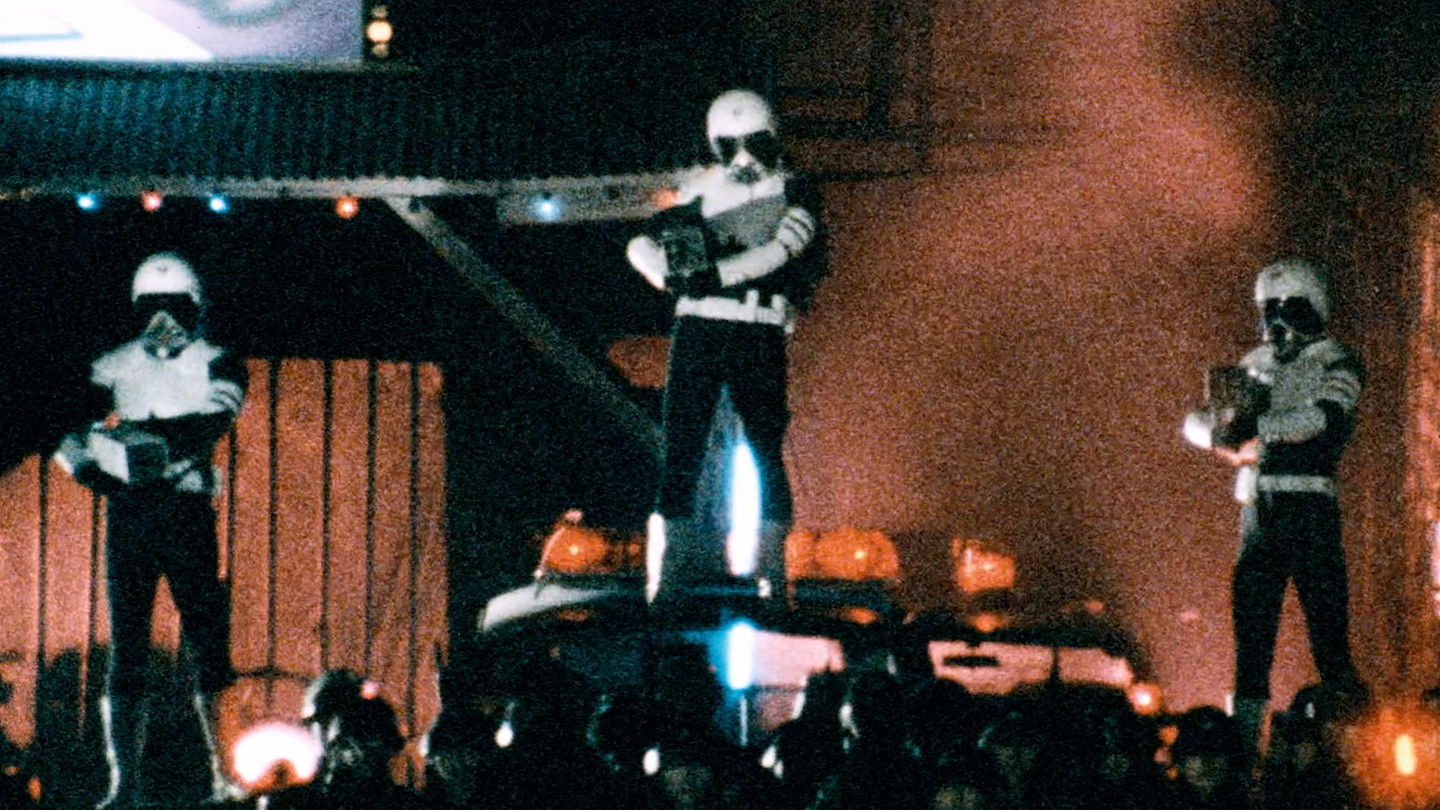
The absolute standout audio scene occurs during the final, legendary battle where the music of The Battle Rockers serves as a rhythmic backdrop to a massive, genuine riot on set between real punk extras and police. This sequence perfectly captures the unhinged, dangerous energy of the 1982 Tokyo underground scene. The lasting subcultural legacy of the film's audio is immense; it proved that the raw energy of underground punk could be translated directly into a cinematic language, fundamentally altering the trajectory of independent Japanese filmmaking for decades to come.
Trailer
Cast
Takanori Jinnai
Command Sasaki
 Shigeru Izumiya
Kuronuma
Shigeru Izumiya
Kuronuma
 Kou Machida
Mad Brother
Kou Machida
Mad Brother
 Shigeru Muroi
Speed Killer
Shigeru Muroi
Speed Killer
 Hitomi Tsurukawa
Miracle God's Evil
Shinya Ohe
Flying Kazato
Hiromi Hiraguchi
Lolicon Politician
Mayumi Ohbayashi
Blue
Hitomi Tsurukawa
Miracle God's Evil
Shinya Ohe
Flying Kazato
Hiromi Hiraguchi
Lolicon Politician
Mayumi Ohbayashi
Blue
 Ken Yoshizawa
Kirishima
Ken Yoshizawa
Kirishima
Media